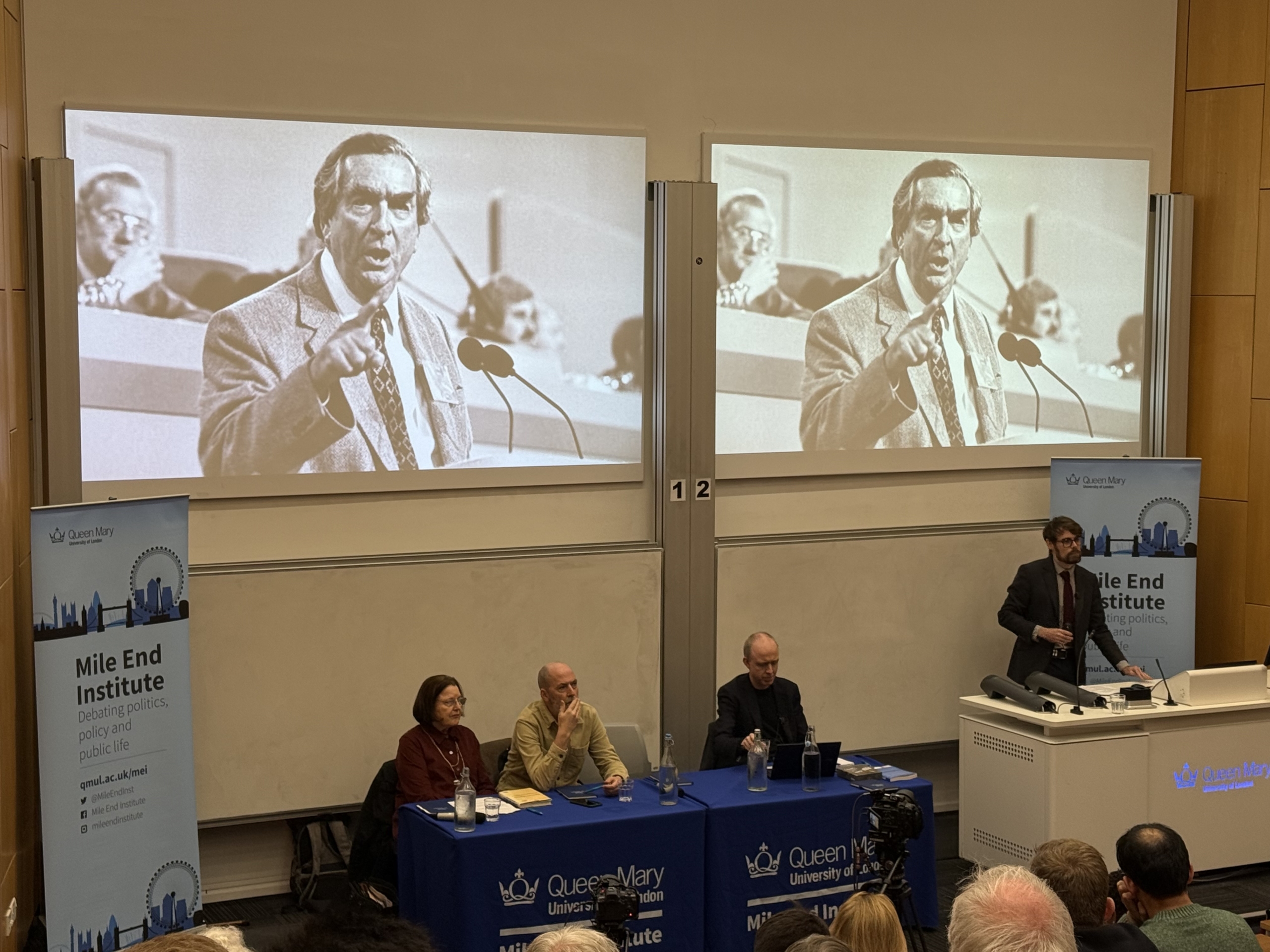
It is fifty years since Chancellor of the Exchequer Denis Healey famously had to abandon his trip to Manila, turn back from Heathrow airport, apply for a loan from the International Monetary Fund and then head to Blackpool to defend his actions at the Labour Party conference.
To mark the anniversary, the Mile End Institute at Queen Mary University of London held an event last night on the lessons from three different economic shocks that impacted British politics: the IMF crisis of 1976, the global financial crisis of 2007-09 and the mini budget of 2022.
It was a particular privilege to meet Kathleen Burk who, along with Alec Cairncross, authored the classic study of the IMF crisis, ‘Goodbye Great Britain’, originally published in 1992.
In her reflections, Burk made a couple of points that remain relevant to economic policymakers. First, she said that she was struck by how insular were the economic policy debates of the day, with a heavy focus on domestic politics and party management and much less discussion of what was happening in the financial markets and why.
This was perhaps inevitable given that few members of the Cabinet had direct experience of the markets, while most were keen students of Labour history and were still haunted by the split in Ramsay Macdonald’s government in 1931, but these perspectives skewed the economic policy debate.
Second, when external economic constraints did feature in discussions, it was more often in the context of the Treasury’s borrowing forecasts than what was going on in the markets. Healey was later to argue that his officials’ forecasts had proved to be inaccurate and that if he had been given the right numbers at the time he would never have needed a loan from the IMF.
But though Healey may have been right in his specific criticism of the Treasury, Burk argues that this misses a wider point. The crisis was not simply a budget calculation issue but a product of underlying structural problems, depleted reserves and a loss of market confidence in UK economic policy. A different set of numbers from the Treasury would not have removed those issues.
Today, the OBR’s immediate assessments of the Chancellor’s fiscal headroom matter less than the long-term economic fundamentals and the perceptions of financial markets.
Although the focus of the event was on 1976, there was also some discussion of the 2007-09 crisis, for part of which I was an adviser to Gordon Brown. If you’re interested, you can read my reflections on the impact of that economic shock on British politics here.

